


Practical Systems That Support Daily Work Without Added Complexity
Internal tools shape how teams work every single day. When systems feel unclear, productivity slows and frustration builds. However, when tools feel intuitive, work flows naturally. Real world use requires clarity, reliability, and ease. People need tools that support tasks rather than interrupt them.
Webdev200 approaches internal systems with practical intent. The focus stays on how teams actually operate. Instead of designing for theory, solutions reflect real workflows. As a result, adoption improves and resistance fades. Teams feel comfortable using tools from the start.
Daily work demands speed and accuracy. Therefore, internal tools must reduce steps instead of adding them. Clear interfaces help users stay focused. Logical navigation prevents hesitation. Consequently, tasks finish faster and errors decrease.
Internal systems also affect morale. When tools feel confusing, stress rises. When tools feel supportive, confidence grows. This balance shapes long term performance. Employees trust tools that help rather than hinder.
Adaptability matters as well. Processes change over time. Teams evolve. Tools must adjust without disruption. Flexible systems support growth while maintaining stability.
Practical systems succeed quietly. They do not demand attention. They simply work. When tools align with real needs, productivity feels natural rather than forced.
Business Focused Services That Strengthen Operational Efficiency
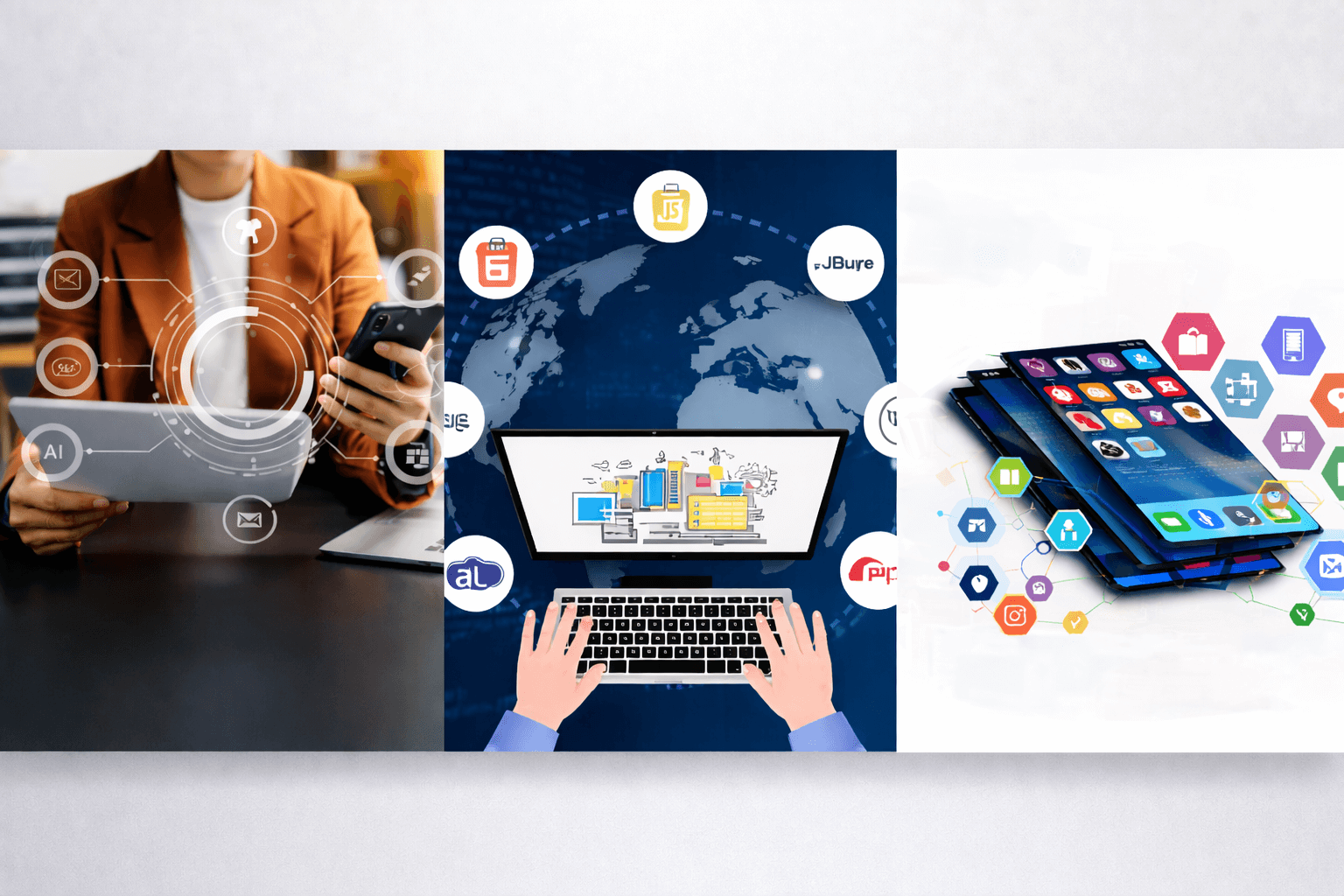
Effective services play a major role in internal success. Without structure, tools become obstacles. With thoughtful planning, they become assets that support daily work.
Business applications organize workflows and data. They connect teams across departments. Because of this, communication improves and delays decrease. Clear dashboards allow quick decisions without confusion.
At the same time, web development supports accessibility and scalability. Internal platforms must work across devices and locations. Browser based access ensures availability without complexity.
Meanwhile, mobile development extends functionality beyond desks. Teams work remotely. Tasks move quickly. Mobile access supports continuity and responsiveness in real time.
Service alignment matters. Each system supports the next. Together, they create cohesive environments instead of fragmented experiences. This connection strengthens efficiency.
When services work together, productivity improves. Teams spend less time navigating tools and more time completing meaningful work.
Technical Foundations That Support Stability And Sustainable Growth
Strong foundations support long term performance. Principles of website development apply internally as well. Clean architecture ensures reliability. Systems scale smoothly without disruption.
Clear structure helps teams learn tools quickly. Website design influences usability. Simple layouts reduce training time. Visual clarity builds confidence.
Performance matters every day. Load speed affects productivity. Optimized systems reduce waiting. As a result, workflows stay consistent and efficient.
Security also supports trust. Stable foundations protect sensitive information. When systems feel secure, teams work with confidence.
Growth requires flexibility. Modular foundations allow updates without full rebuilds. This approach protects investment while supporting change.
Reliable systems build trust over time. Teams rely on tools that perform consistently. Stability supports progress without friction.
Visibility And Performance Across Connected Digital Environments

Internal tools rarely exist alone. They connect to external platforms and data sources. Online presence often depends on internal efficiency. Information flows outward from internal systems.
Search visibility also connects indirectly. SEO insights guide content updates and reporting tools. Internal platforms support optimization decisions by organizing data clearly.
A skilled web developer understands these connections. Systems must integrate smoothly. Dashboards, analytics, and APIs work together without friction.
Visibility improves decision making. Metrics reveal performance patterns. Teams act with clarity rather than guesswork.
Connected environments also support responsiveness. Updates reflect quickly. Information remains current across teams.
When systems align, visibility improves and performance follows naturally.
A Clear Direction Toward Tools That Truly Support Teams
Internal tools should empower people rather than restrict them. Clear design encourages adoption. Practical function supports outcomes. Teams feel supported instead of constrained.
Organizations that invest in usability see better results. Errors decrease. Confidence grows. Work feels smoother.
Thoughtful development focuses on real use. Tools must reflect actual workflows. When systems serve people first, productivity improves.
If your goal involves tools that grow with your teams, clarity matters. Design choices shape daily experience.
When internal tools align with real world needs, efficiency follows naturally and progress becomes sustainable.